Blowing sand, relentless sun, and a rotating cast of short-term renters make Huntington Beach one of the toughest environments in Orange County for keeping an Ipe deck looking its best.
A short-term rental near the pier needed its Ipe deck restored between guest bookings; we scheduled sanding and oiling during a single vacancy window to avoid affecting the property’s reservation calendar.
A patio just off a walk-street had heavy sand abrasion on its main walking path from years of beach traffic. Sanding smoothed the worn boards before oil restored their color.
Built-in Ipe benches and a stair railing on a bluff-top home above PCH were cleaned and refinished to match a newly resurfaced main deck.
A rooftop entertaining deck with ocean views had developed uneven graying from sun exposure on one side and shade from a stairwell structure on the other; a full sand pass evened out the color before oiling.
Huntington Beach earns its Surf City nickname with wide, flat beaches and a coastline where sand travels well past the shoreline on windy afternoons, settling into deck boards, railing joints, and stair treads throughout neighborhoods like Sunset Beach, the bluffs above PCH, and the older beach lots south of the pier. Ipe holds up structurally to that abrasion far better than softer decking materials, but sand acts almost like a fine sandpaper over time, gradually wearing away the protective surface oils on high-traffic walkways and stair treads faster than sun alone would. Combine that with Huntington’s long, sunny season and you get decks that need attention on a noticeably tighter cycle than similar wood just a few miles inland.
A lot of Huntington Beach’s coastal housing operates as vacation rentals or second homes, which changes the maintenance equation: decks get heavy foot traffic in short bursts, often from guests who aren’t thinking about tracking sand or leaving wet towels on the wood, and owners frequently aren’t on-site to notice gradual graying until they visit for a stay. We work with several property managers here who schedule restoration between rental turnovers specifically to avoid disrupting bookings.
We’re the same veteran-owned crew behind Huntington Beach teak restoration and outdoor furniture refinishing. Browse recent projects in our project gallery or request a free estimate for your Huntington Beach Ipe deck.
The silver-grey on a weathered Huntington Beach deck is degraded lignin — the natural adhesive between wood fibres. UV breaks it down, rain and fog wash the residue away, and what is left is a loose, fibrous surface roughly a tenth of a millimetre deep.
Ipe’s extractives, the same compounds that make it rot-resistant, also react with iron. That is the source of the dark halos around older screws and any steel that has sat on the deck. It is a chemical stain, not decay, and oxalic-based brightener lifts it.
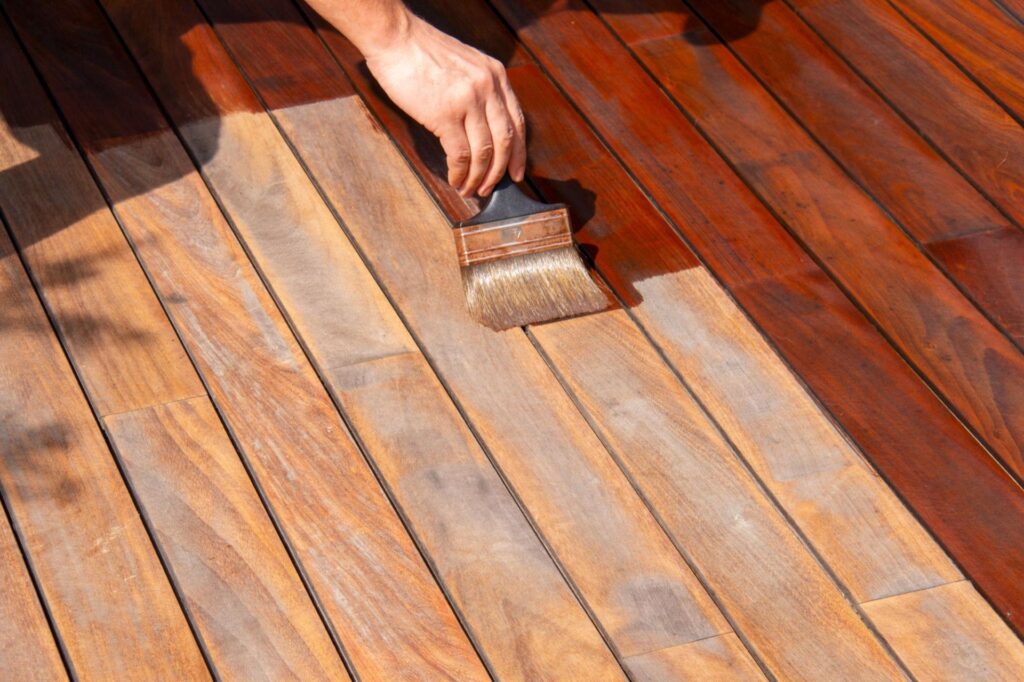
Sanding through that layer is what reveals the chocolate and olive tones people forget the deck ever had. It is not a stain or a dye — the color was there the whole time under the oxidation.
Free, on-site, usually thirty minutes. You get square footage, condition notes and a fixed written price — no surprises later.
Glass, stone, planting, pool coping and cable rail all get masked. Dust containment matters as much on a deck as it does indoors.
A dedicated hardwood cleaner is left to work rather than blasted off. Pressure washing shreds Ipe’s soft early wood and we do not use it.
We chase out the fuzz, the checking and the traffic lanes until the surface is uniform under raking light.
Oil on the field boards, hand-worked into fascia, stair risers and rail caps where the eye lands first.
We hand the deck back in daylight, point out anything worth watching, and book the maintenance coat if you want one.
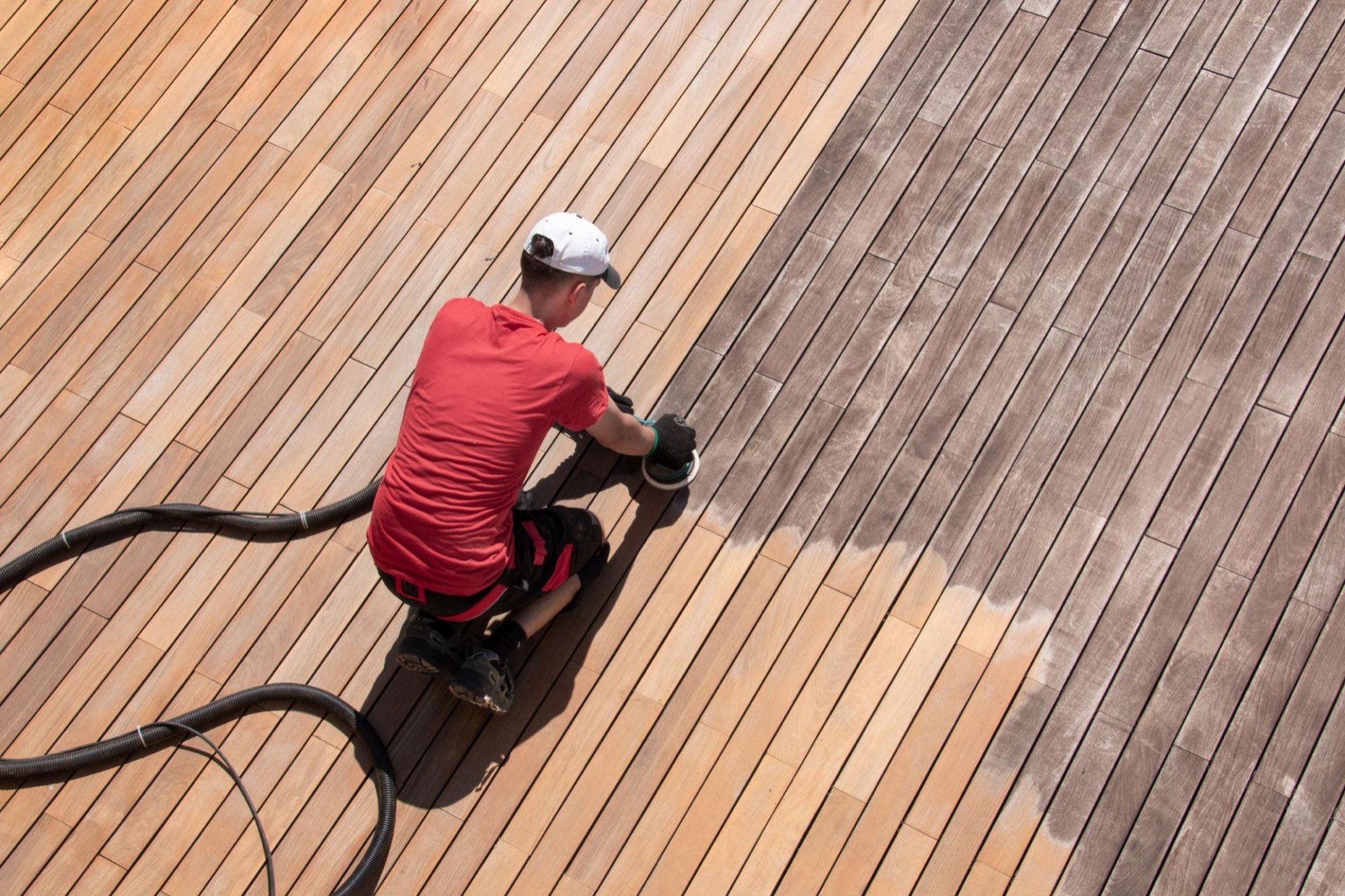
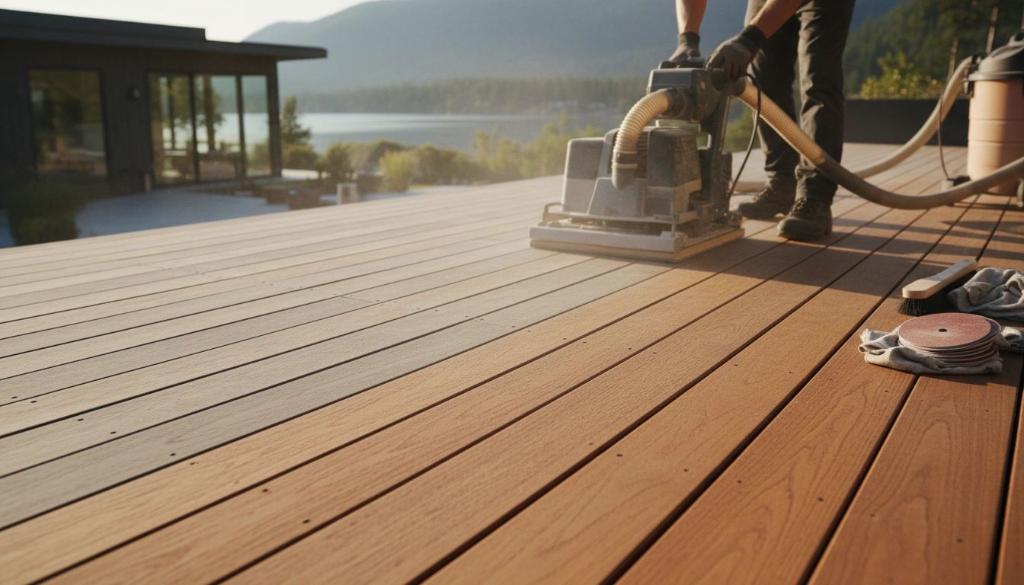
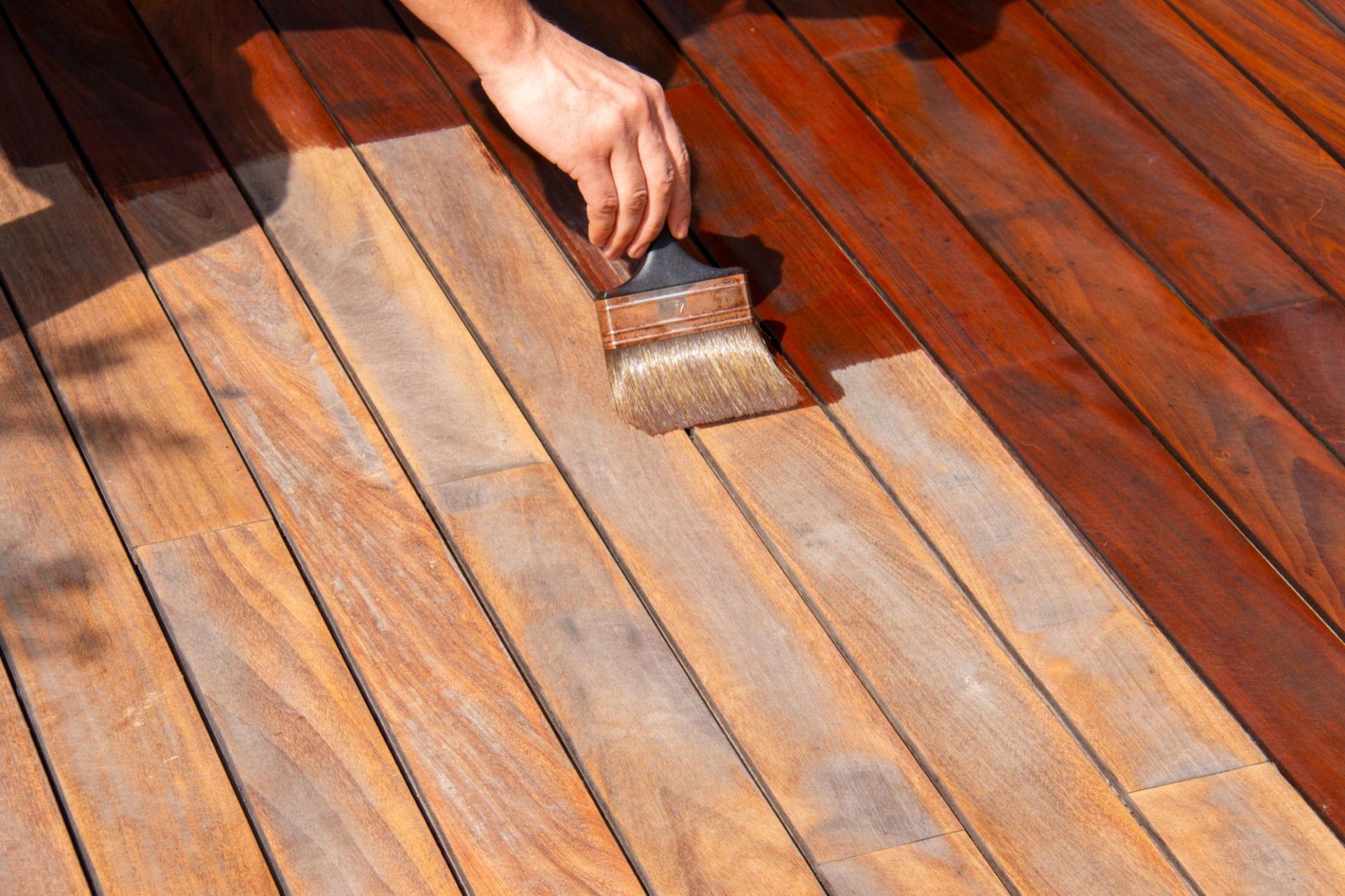
A full restoration removes both the sun-oxidized surface and any sand-embedded roughness, leaving boards smoother underfoot as well as richer in color — a meaningful difference for beach-adjacent decks where people are frequently walking barefoot. Freshly oiled Ipe also sheds sand more easily than bare, weathered wood, since the sealed surface gives grit less to grip onto, which can modestly extend the interval before the deck needs cleaning again.
Silvered Ipe looks neglected next to modern glass and stone. A finished deck ties the whole elevation together.
Listing and rental photography in Huntington Beach lives or dies on the outdoor space. A refinished deck changes the first frame.
Water that stops at the surface never reaches joists, hangers and fasteners underneath.
Splintering, raised grain and lifted fasteners all get resolved as part of the same visit.
Regular sweeping or blowing off sand before it gets ground into the wood by foot traffic is one of the simplest things Huntington Beach homeowners and rental managers can do between professional visits.
Because so many of these decks see rental guest traffic, we often suggest scheduling a rinse and inspection between bookings rather than waiting for a visible problem, since sand abrasion can wear through surface oils well before the wood looks obviously gray.
On decks closer to Sunset Beach and the immediate shoreline, salt air adds to the sun and sand combination, so we typically shorten the reoiling interval compared to homes a few blocks back toward Beach Boulevard.
Salt air, marine sun and coastal humidity break down every Ipe deck eventually. Our marine-grade oils and hand-sanded finishes are engineered for oceanfront homes in Huntington Beach — protecting your investment year after year.
Windblown and foot-tracked sand acts like fine abrasive grit, wearing through surface oils faster on high-traffic paths than sun exposure alone would, which is why walkways often gray before the rest of the deck.
Yes, we regularly schedule work in Huntington Beach around rental calendars, aiming to complete sanding and oiling within a single vacancy window whenever the timeline allows.
Generally yes — properties right along Sunset Beach or the pier corridor face more combined salt and sand exposure than homes set back a few blocks toward Beach Boulevard.
It’s usually just rougher underfoot from sun and sand abrasion rather than truly hazardous, but a fresh sanding noticeably smooths the surface, which matters for beach homes where people walk barefoot often.
Regularly. Restaurants, hotels, and HOA common areas get phased scheduling so sections stay open, plus documented product specs for the property file.
Usually yes. We source Ipe of comparable density, let it acclimatise to Huntington Beach conditions, then brighten and finish the whole deck together so the repair blends rather than stands out.
Odour is mild and gone within a day or two outdoors. Planting, turf and pool water are masked before we start, and wash water is contained rather than run into beds or drains.
Significantly. A recoat on a sound surface is a fraction of the cost of a full restoration, because the expensive part of the job is always the abrasion, not the oil.
Working out which grade you are in makes the estimate conversation much shorter.
Colour flattening, still shedding water. A wash and one maintenance coat holds it.
Grey across the exposed field, surface still smooth. Light sand, brighten, two coats.
Rough, fibrous, some checking and staining. Full multi-grit sand back to sound wood.
Deep checking, cupping, proud fasteners, black spotting. Carpentry first, then a full restoration.
If you are comparing quotes across the area, these nearby Huntington Beach service pages cover the same work in neighbouring towns.
Browse all restoration and maintenance guides
We can sand a test patch during the estimate so you can see the color before committing to anything.
We respond within 1 business day. No spam, ever.
Furniture, decking and brightwork restoration for Huntington Beach homes.
Teak Restoration nearby